New preprint: Few-body decay in quantum-dot clusters
Our new preprint led by Emma Daggett studies how emission decay changes with the number of emitters in clusters of up to ten quantum dots.
 Quantum Optics Lab @ Purdue
Our goal is to understand and control the interactions between light and quantum emitters.
We work with two platforms: single atoms held in optical tweezers, and single organic molecules cooled inside a crystal. In both, we are working toward better quantum control of the emitters.
With the atoms, trapped in arrays of optical tweezers, we have worked on understanding cooling in lithium and cesium and on characterizing a narrow line in cesium. We are now working on efficient ways to collect the light they emit, on studying collective effects, and on building toward a nanophotonic interface.
With the molecules, we have introduced new ways of integrating emitters with integrated photonics. We are working toward two things: generating highly pure photons that can be used for entanglement distribution, and studying the fundamental collective interactions between emitters, including how they can be used to generate multi-photon states, how to characterize those states, and what they are useful for in quantum information science. We are now extending these same questions to colloidal quantum dots, a second chemically synthesized emitter, where our first paper is on its way.
Our new preprint led by Emma Daggett studies how emission decay changes with the number of emitters in clusters of up to ten quantum dots.
Congratulations to Christian Lange on being named a Purdue Innovates Commercialization Fellow.
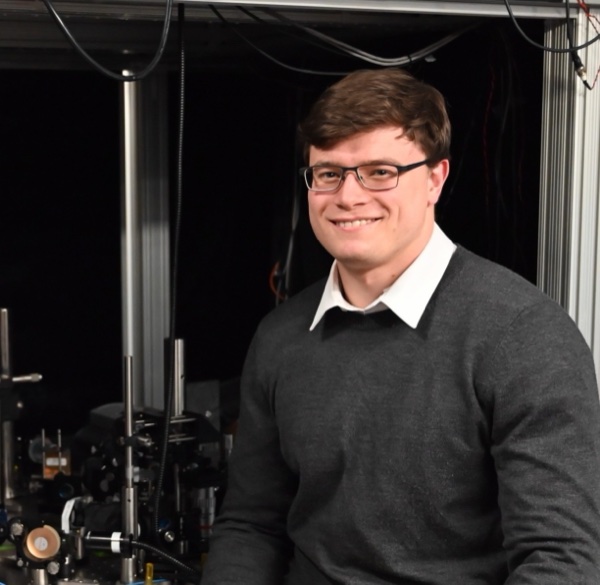
Congratulations to Dr Saumitra Phatak on his thesis defense!
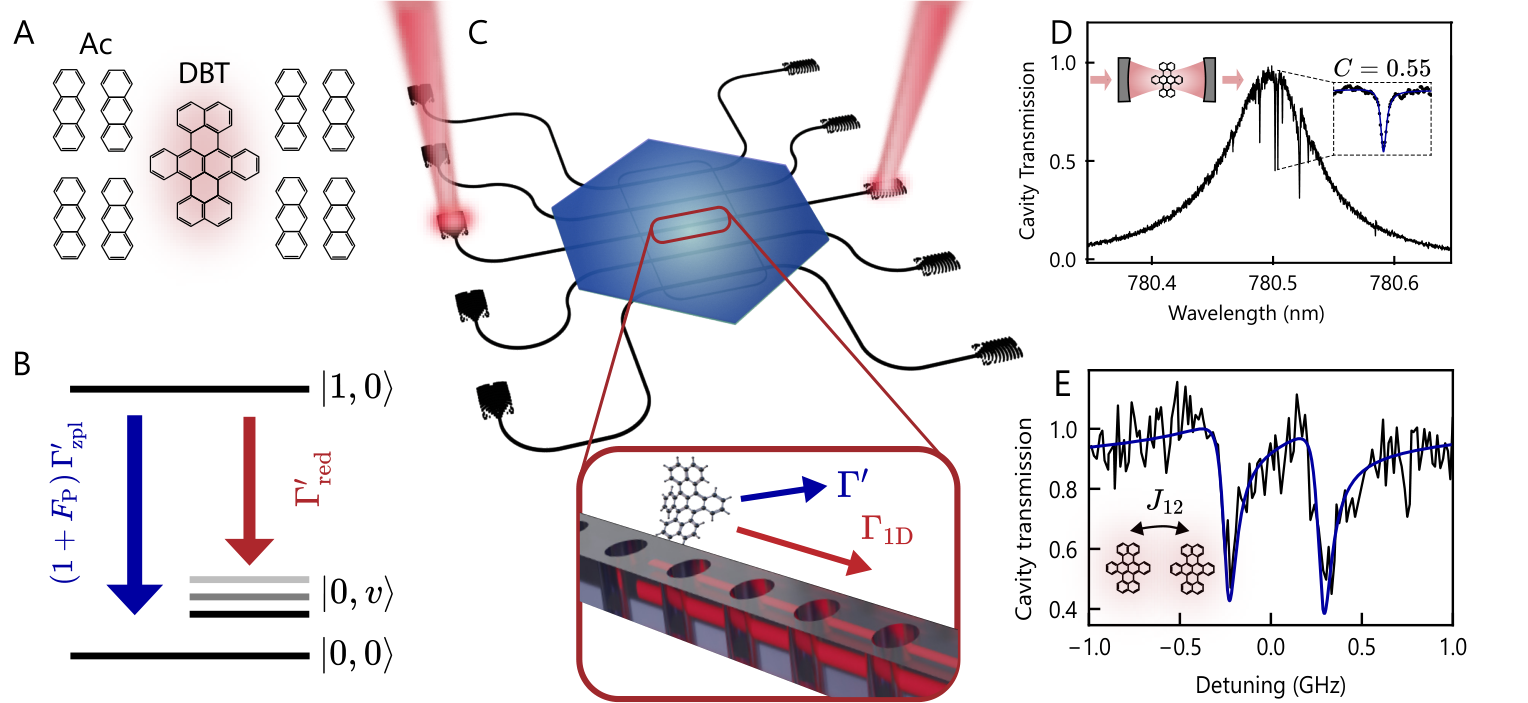
Our latest paper led by Christian Lange has been published in ACS Nano! We present a hybrid solid-state cavity quantum electrodynamics platform that integrates coherent organic molecules with high-quality-factor silicon nitride photonic crystal cavities. By mechanically transferring thin anthracene crystals doped with dibenzoterrylene (DBT) onto prefabricated cavities, we preserve both the cavity quality and molecular coherence. With up to ten molecules coupled to a single cavity, we observe cav
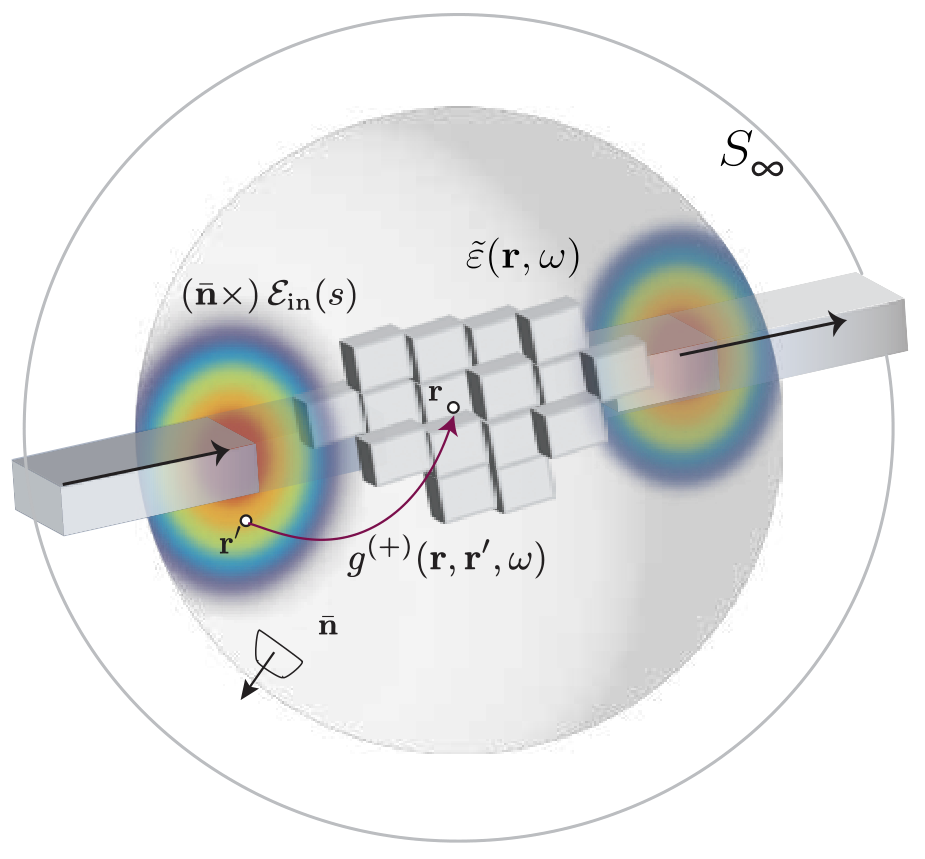
We have a new preprint presenting a first-order electromagnetic operator formalism for macroscopic quantum electrodynamics. This work by Ishita Agarwal introduces a compact first-order Maxwell operator approach that simplifies the treatment of quantized electromagnetic fields in the presence of dispersive and absorbing dielectric media. The formalism provides a natural framework for field decomposition and mode analysis in complex nanophotonic geometries.I Agarwal, A Kundu, CM Lange, JD Hood, "F
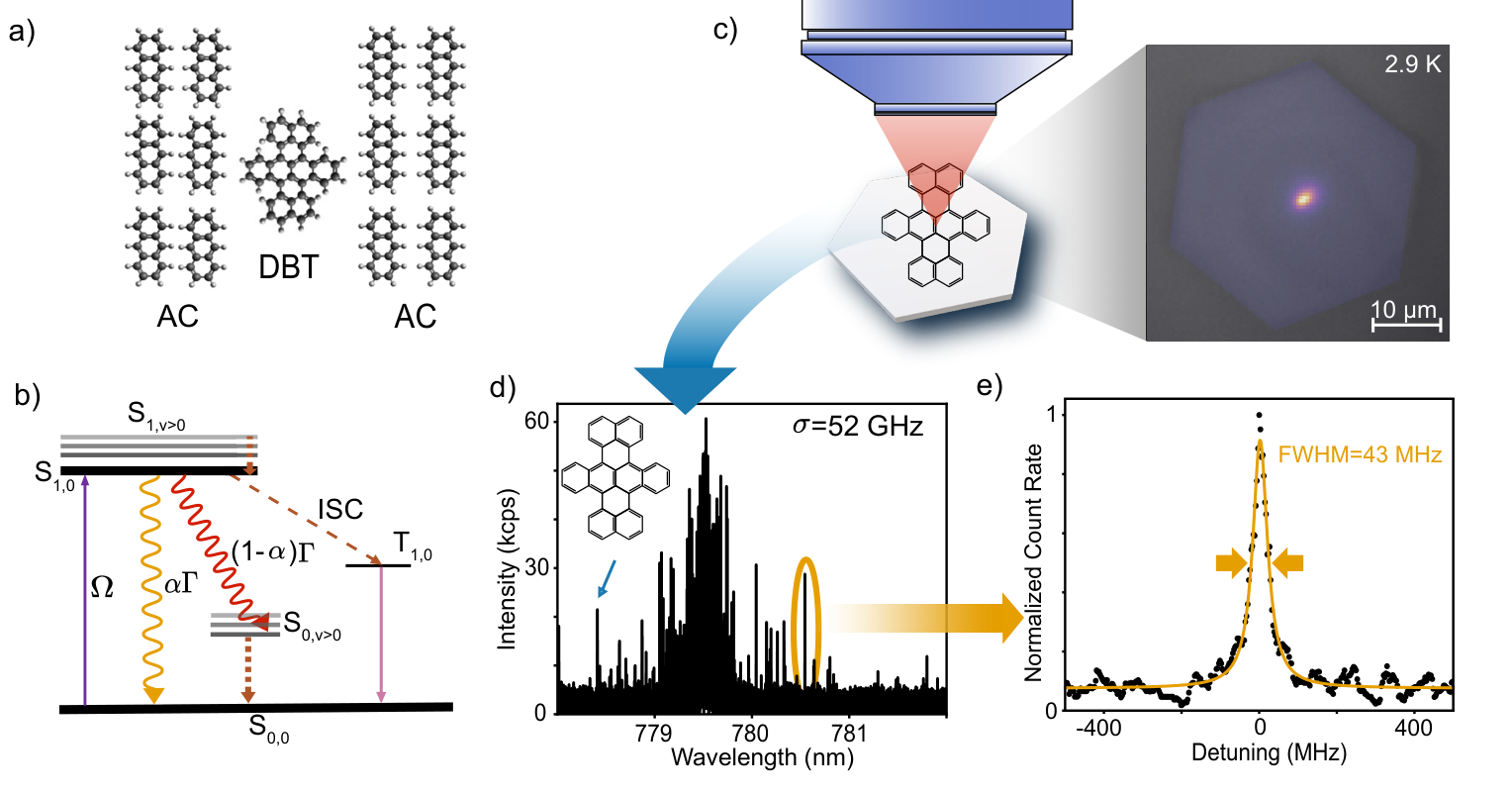
We are excited to share our latest preprint on the vapor-phase assembly of molecular emitter crystals for photonic integrated circuits. In this work, we demonstrate a scalable method for growing optically thin, high emitter density anthracene crystals doped with dibenzoterrylene (DBT) molecules directly onto photonic chips. This approach enables the deterministic integration of quantum emitters with nanophotonic structures, a key step toward building practical quantum photonic devices.AD Keni, C
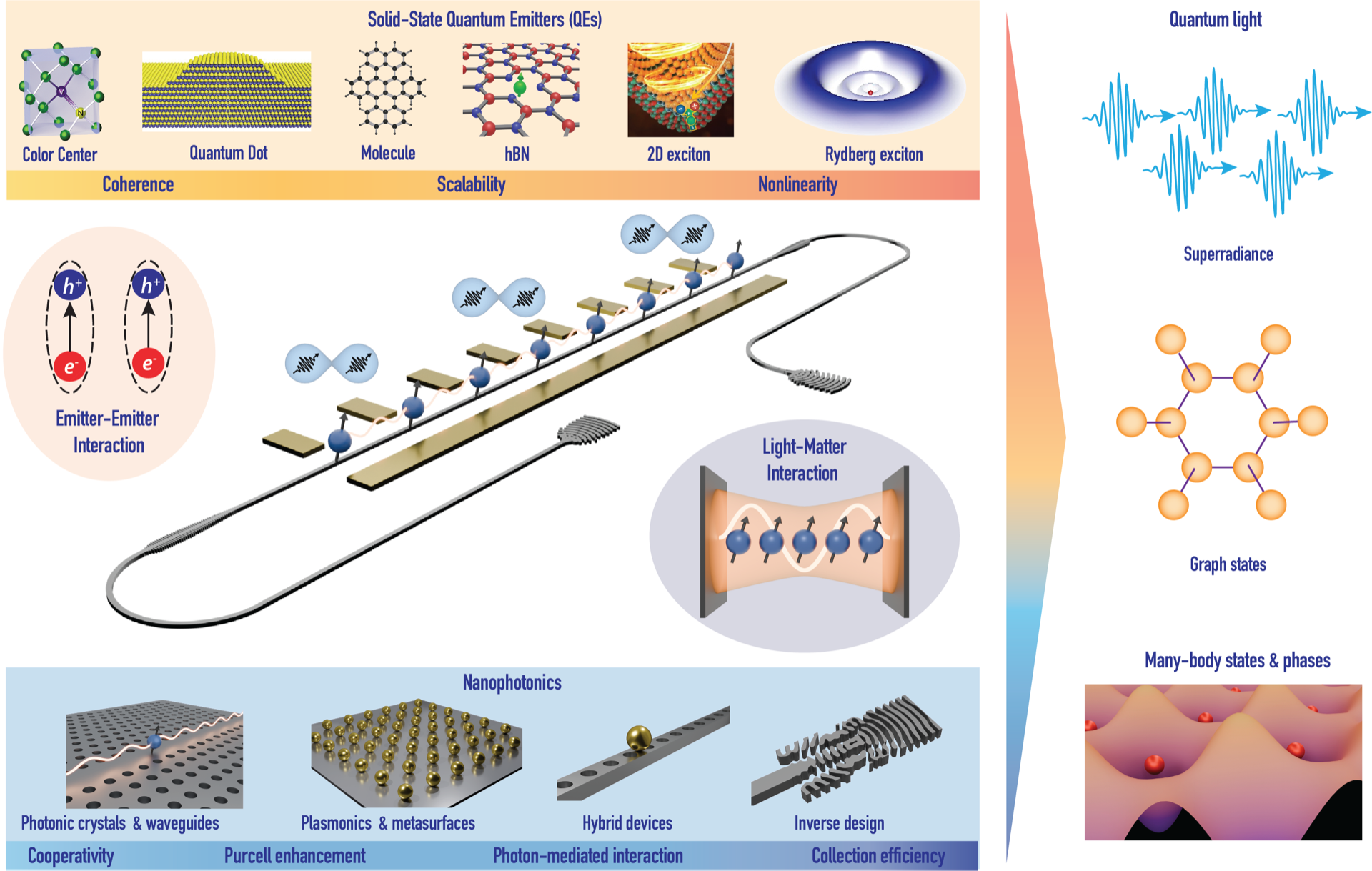
Congratulations to Emma Daggett and the entire team! Our review article on many-body entanglement in solid-state quantum emitters has been published in Nature Reviews Materials. Led by Emma Daggett, this comprehensive review covers the path toward achieving many-body entanglement with solid-state quantum emitters integrated in nanophotonic structures. We discuss single-emitter coherence and control, photon-mediated interactions, and the outlook for scalable quantum networks based on these platfo
Congratulations to Karl Blodgett, who is leaving the Hood Lab to join Quantinuum! During his time as a postdoc, Karl made key contributions to our ultracold atoms program, including high-fidelity imaging of single lithium atoms with over 2000 consecutive images without loss (Phys. Rev. Lett., 2023) and narrow-line electric quadrupole cooling of single cesium atoms (Phys. Rev. A, 2025). Karl's experimental expertise in optical tweezers and laser cooling has been invaluable to the group. We wish h
Congratulations to Christian Lange for successfully defending his PhD thesis! Christian's graduate work in the Hood Lab advanced our understanding of coherent dipole-dipole interactions between organic emitters, culminating in the first observation of superradiant and subradiant states in lifetime-limited organic molecules (Nature Physics, 2024). He also led the development of a hybrid molecular-nanophotonic platform integrating organic emitters with photonic integrated circuits for on-chip cavi
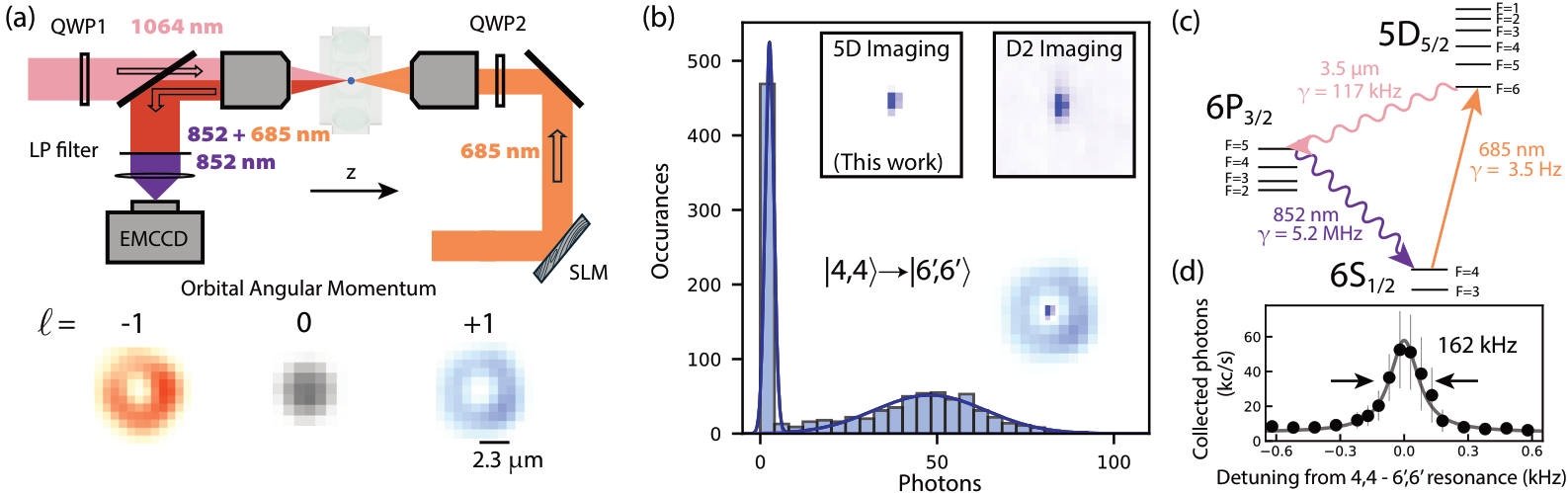
We demonstrated background-free imaging and single-photon sideband cooling for a single Cs atom trapped in an optical tweezer. This is a significant advancement in neutral-alkali atoms, as previously there weren't any narrow lines used for imaging/cooling. This paper also discusses how one can drive quadrupole transitions transferring two units of angular momentum using a single photon by either a focused Gaussian beam or a vortex beam generated via an SLM. Here's the link to the arXiv article: